
How d.Code works — from consultation to sync.
Every d.Code project follows the same path — pre-sales discovery, fit-for-purpose configuration, on-site deployment and long-term support. Here's what that looks like, and how the platform itself works underneath every product.
Every project, the same four steps
A grounded, repeatable process — proven across 15 years of mining, manufacturing and construction deployments.
Pre-sales consulting and process discovery to map exactly where mobility moves the needle.
Configuration and development tuned to your platform, your workflows, your floor.
Installation, change management and training so adoption sticks from day one.
Post-deployment services that keep the solution running as your business grows.
One platform, five products, one SAP integration
Every d.Code product runs on the same mobile application platform. Same offline-first foundation, same barcode and RFID engine, same SAP-certified integration layer.Add another product, and it plugs into the platform your team already knows.
Keeps working when the network drops, syncs on reconnect.
Scan to advance. No manual keying, no transcription errors.
Movements and confirmations posted directly to SAP.
Web, Android, iOS and Windows from a single flow definition.
Plan, mobilise, execute, sync — every product
Whatever the product — receiving stock, closing a work order, dispatching a vehicle — every d.Code process follows the same four-step rhythm.
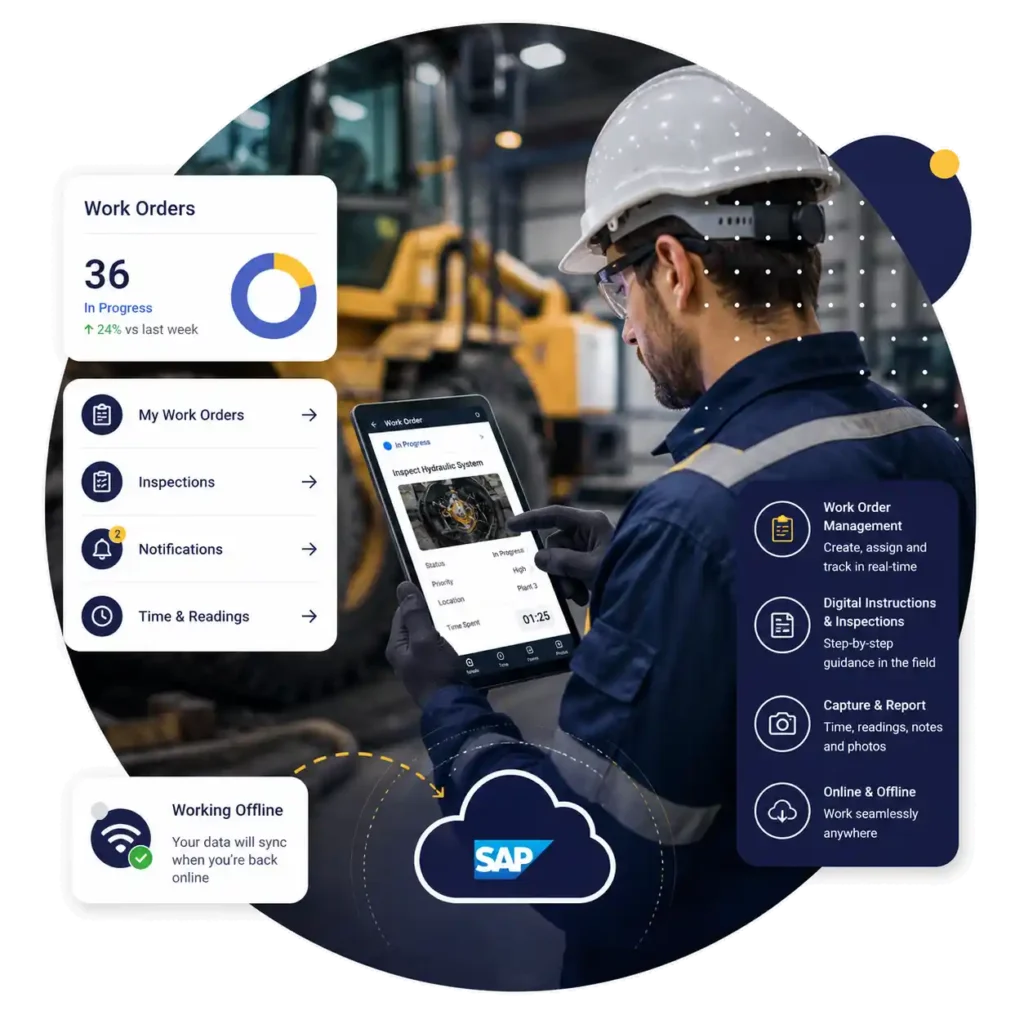
Work orders, reservations and stock documents are created and planned in SAP exactly as today.
Tasks land on the right person's device — simplified, role-specific screens with only what they need.
Teams scan barcodes, capture readings, photos and signatures — online or offline, from any location.
Every action posts back to SAP in real time — accurate, traceable, paperless records. No catch-up.
Five products, one connected materials journey
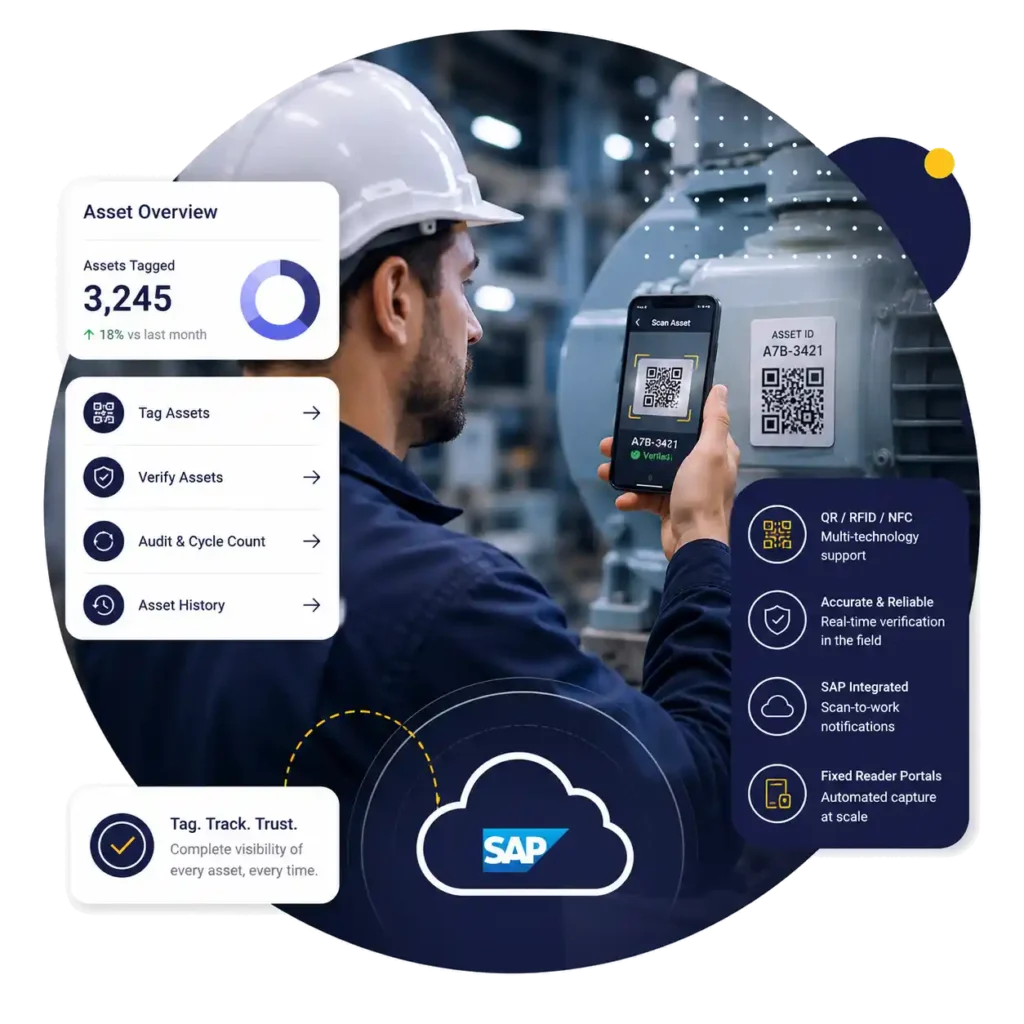
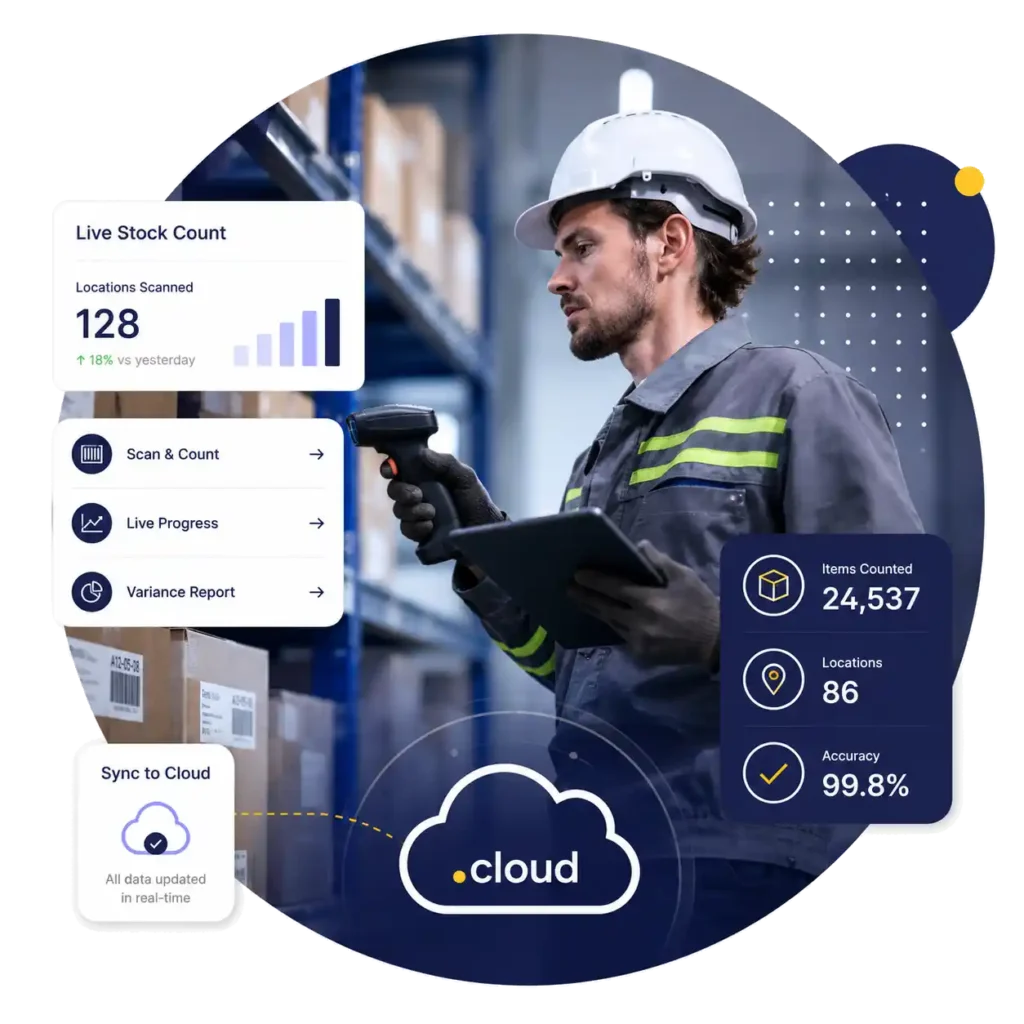
very asset starts as stock in the store, gets tagged and deployed into service, and comes back for spares when maintenance is called.d.Code covers every step of that journey.
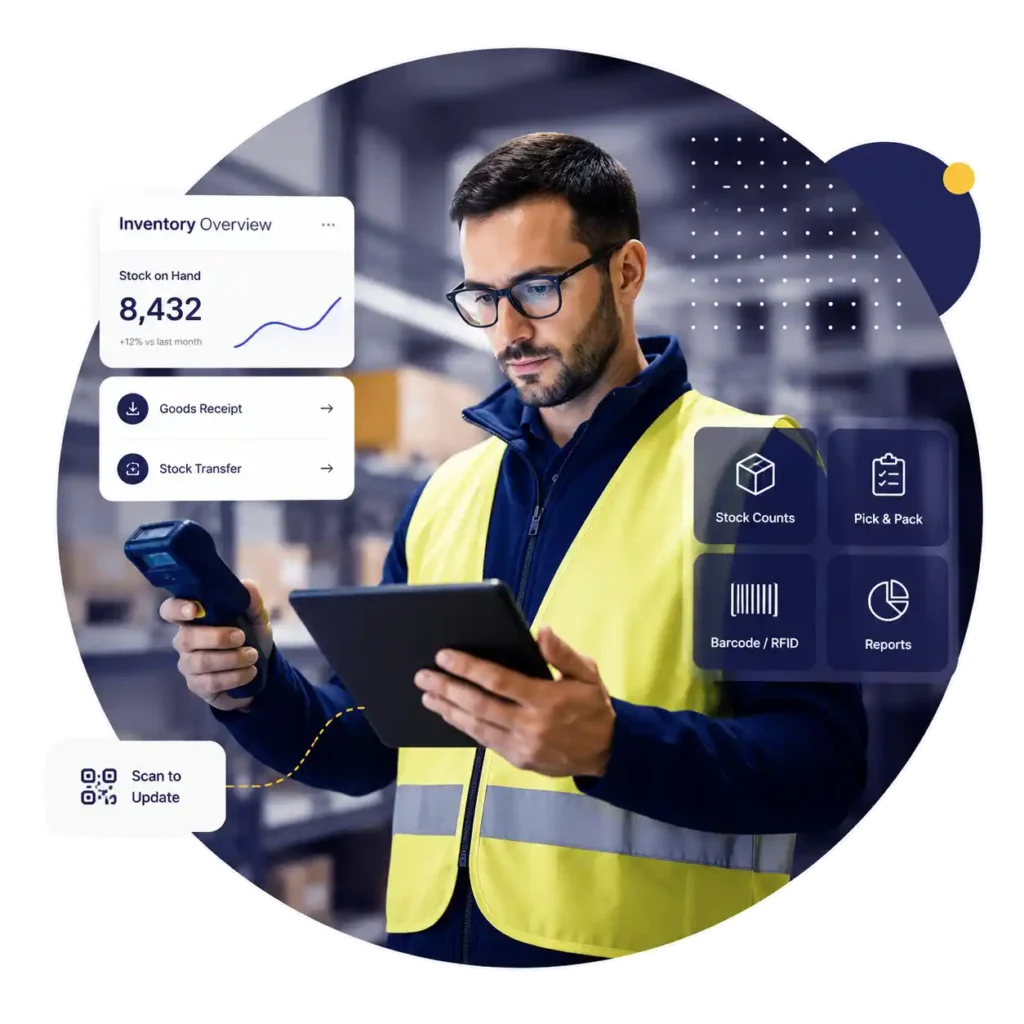
The business case for going mobile
Faster turnaround times
Closing the gap between an issue being logged and action being taken — no batch delays, no paperwork queues.
Less admin per transaction
Data is captured once, at the point of work — no re-keying paper records back into SAP at the end of a shift.
Higher accuracy
Scanning at the point of work removes recapture from paper, cutting transcription errors to close to zero.
Real-time visibility
Live updates to SAP mean planners and supervisors can manage as work happens, not after the fact.